Building Schools, Not Buildings
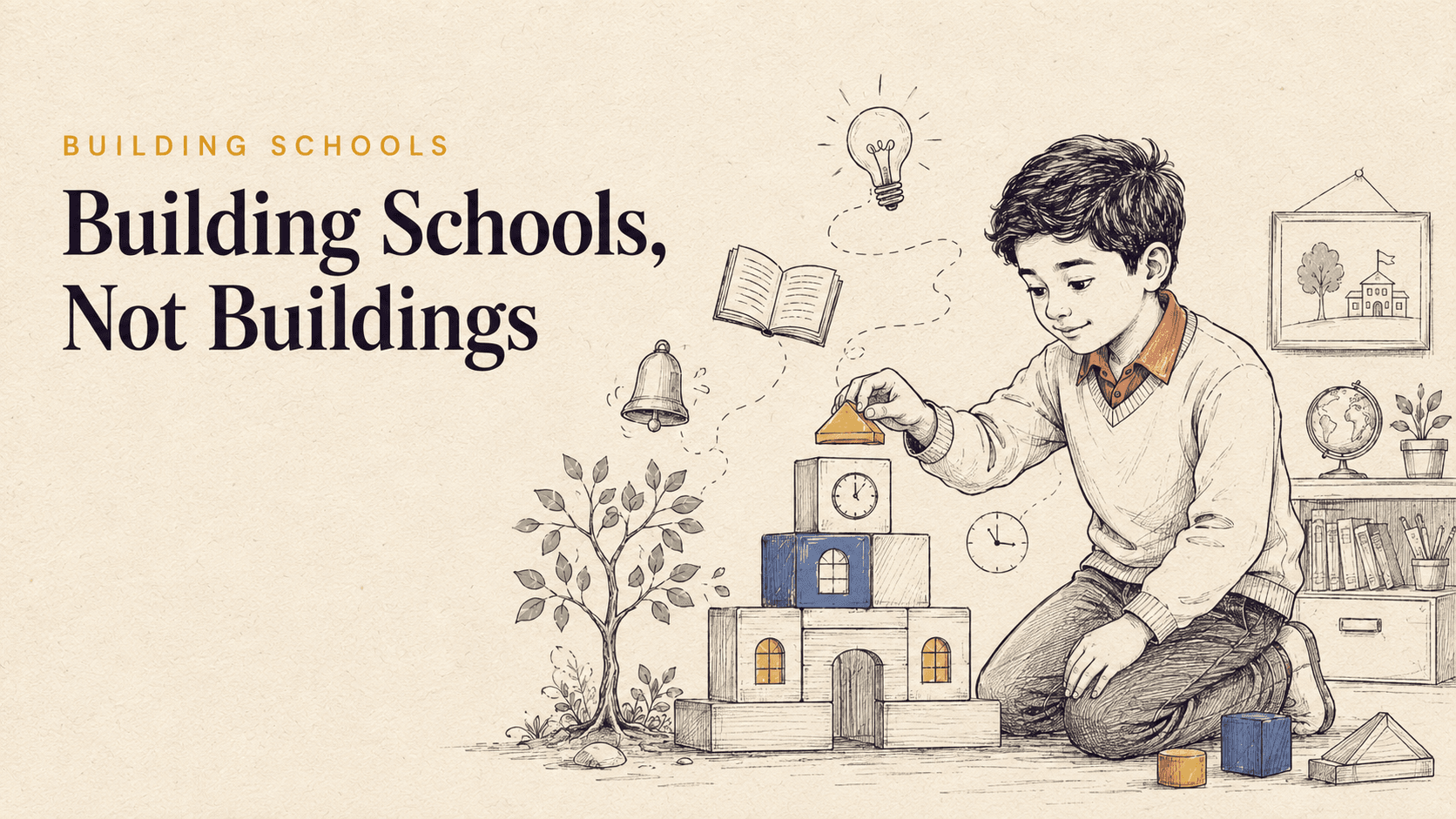
A beautiful campus can attract attention, but it cannot create a school. A school is built in its invisible architecture: the quality of its teachers, the consistency of its culture, the clarity of its curriculum and the trust surrounding every child.
This is why creating an educational institution is far harder than completing a building. Hiring is not simply about finding qualified teachers; it is about finding adults who can combine subject knowledge with patience, observation and the humility to keep learning. Culture is not a slogan painted in a corridor. It is what leaders tolerate, what teachers model and what children experience when they make a mistake.
Curriculum presents another challenge. It must protect foundational knowledge while making room for inquiry, creativity, emotional development and responsible use of technology. Finance matters just as much. Teacher salaries, training, safety, maintenance and learning resources are not background costs. They are the operating conditions of educational quality.
The physical environment should serve this philosophy. Instead of chasing scale and architectural glory, I increasingly believe in smaller spaces that create belonging. A child who feels anonymous is less likely to speak honestly, ask a risky question or admit confusion. A child who feels known is more willing to participate. International evidence links safety and belonging with stronger well-being, confidence and learning.
Therefore, the real design question is not, “How impressive will this campus look?” It is, “How will this child feel inside it?” Buildings provide classrooms. Relationships turn those classrooms into communities. A founder succeeds only when every operational decision from recruitment to room design makes meaningful learning more likely.
Written by Raj Mirani, founder of Divine Group of Schools.