Every Child Deserves to Be Seen
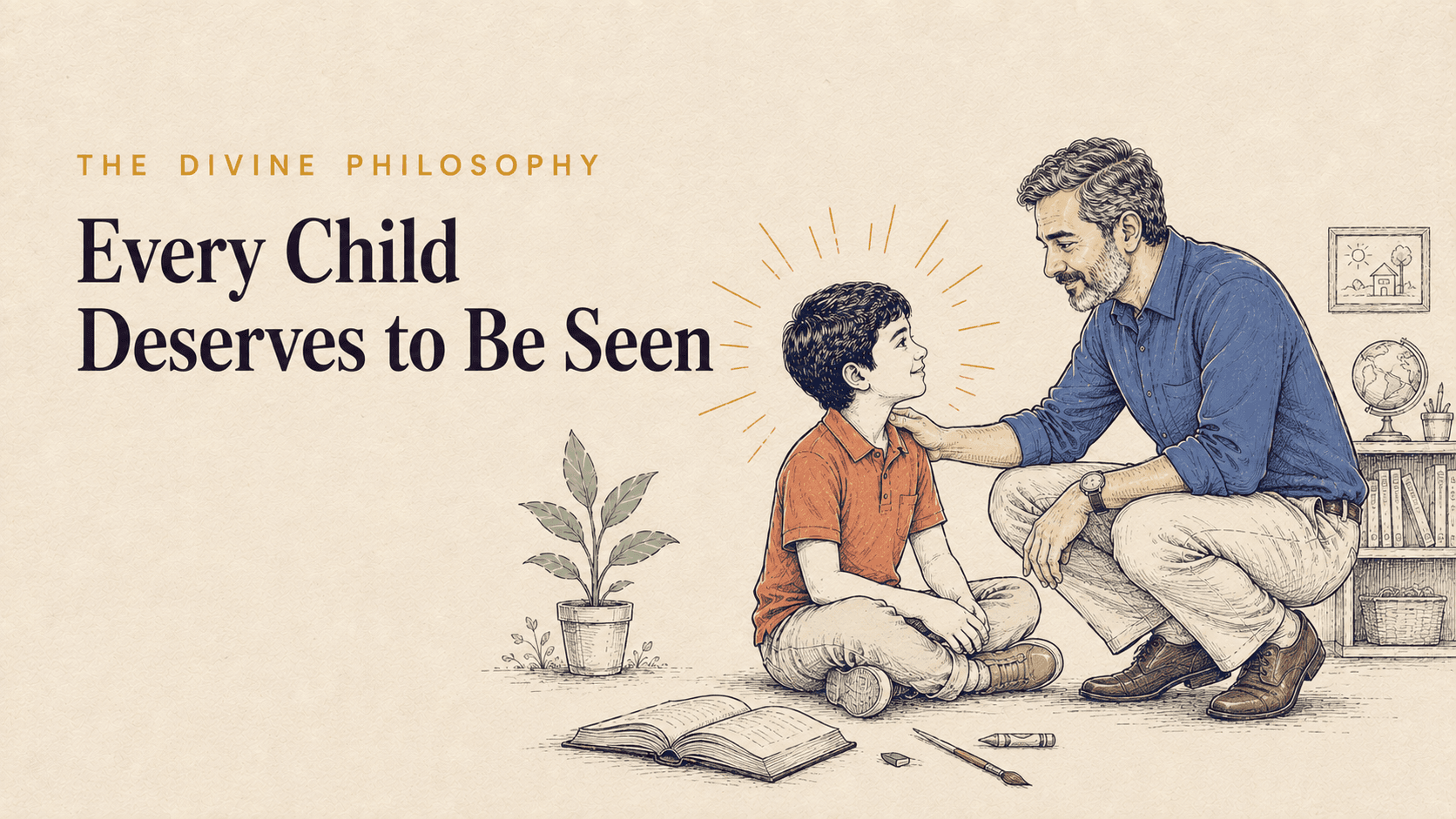
The philosophy behind Divine begins with a simple belief: a child learns best when the child feels seen. Being seen is not the same as being constantly praised. It means that an educator notices a learner's questions, strengths, fears, interests and changing needs.
From this belief follow several principles. Safety must come before intellectual risk. A child who is worried about ridicule will protect herself by becoming quiet; a child who belongs can ask, create and disagree. This is why we value smaller, human spaces—not because ambition should be small, but because relationships should be close enough to matter.
Expression is not an extracurricular luxury. Art, storytelling, conversation, movement and collaborative work help children turn knowledge into meaning. OECD evidence shows that classroom opportunities to express original ideas are associated with stronger creative thinking. Values are equally practical. Respect, responsibility, gratitude and empathy must appear in routines and decisions, not only in assemblies.
Technology fits within this philosophy, but it does not lead it. UNESCO's AI framework asks schools to prepare students as responsible users and co-creators through a human-centred mindset, ethics, application and design. At Divine, that means helping children use AI to explore and solve problems while retaining judgment, honesty and accountability.
This is what holistic education should mean: not a long list of activities, but a coherent design for the whole person. Academic knowledge, emotional intelligence, creativity, character, communication and physical well-being should reinforce one another.
We cannot promise to predict every future our children will enter. We can promise to build a school in which they are known, challenged and trusted so they leave not only prepared to succeed in the world, but prepared to improve it.
Written by Raj Mirani, founder of Divine Group of Schools.