Parents Are the First Teachers
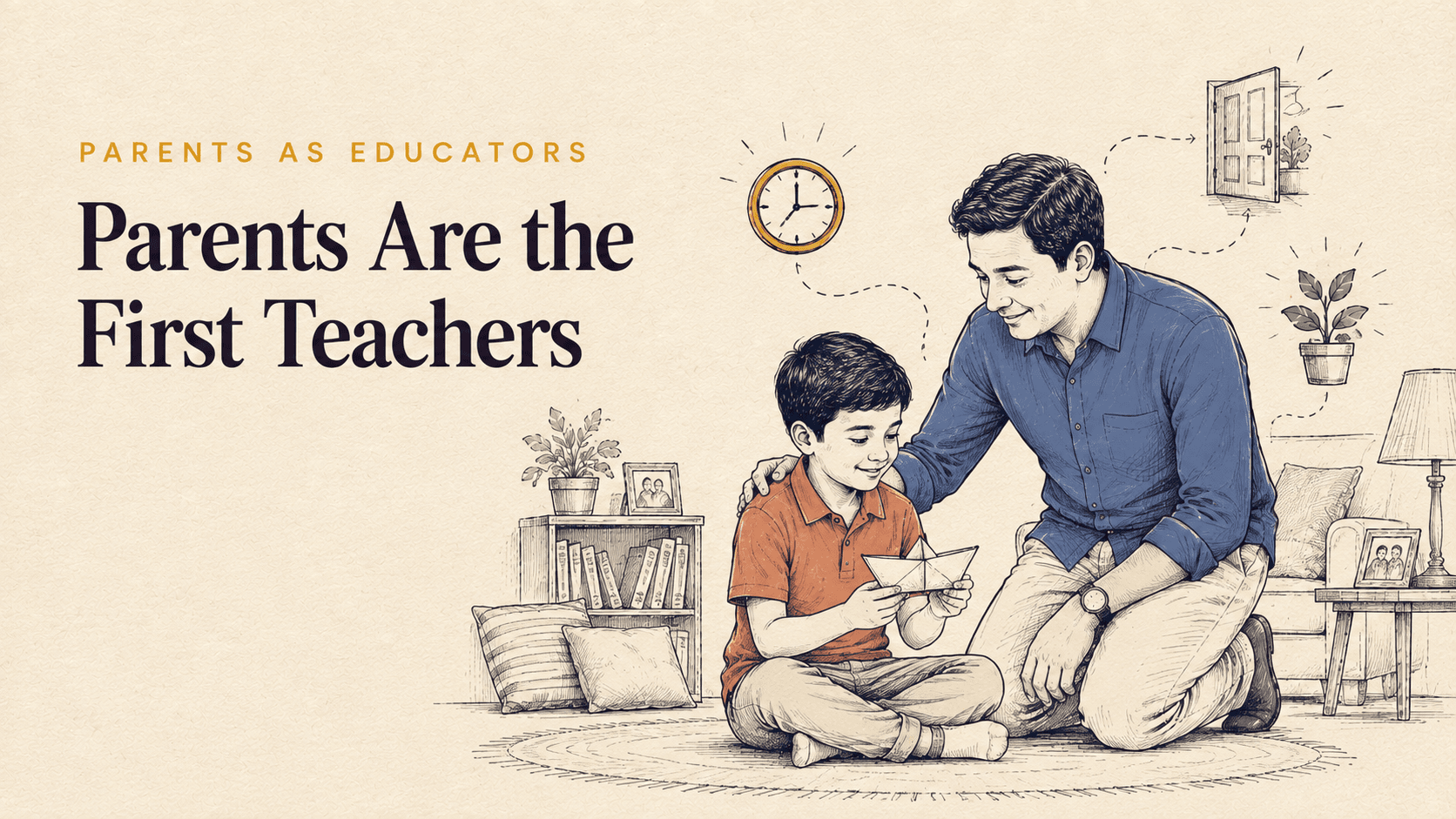
Before a child meets a classroom teacher, the child has already studied the adults at home. Children learn how to speak, disagree, recover from failure, and treat other people by observing us. Parenting is therefore not preparation for education; it is the first form of education.
This changes how we think about confidence. Confidence does not grow from constant praise or protection from every difficulty. It grows when a child attempts something meaningful, struggles safely and discovers, “I can improve.” Parents can support this by praising effort, strategy and honesty rather than only outcomes.
Discipline should also be understood as teaching, not merely punishment. The goal is not a child who behaves only when watched, but a young person who can regulate emotion, consider consequences and repair harm. Harvard's work on executive function describes self-control, working memory and mental flexibility as capacities that develop through interaction and practice.
Screen time deserves the same thoughtful approach. The most useful question is not simply, “How many minutes?” The American Academy of Pediatrics encourages families to examine the child, the content, whether media is used to calm, what it crowds out and how communication happens around it. A creative video call with grandparents is not developmentally identical to endless passive scrolling.
Character is built through ordinary routines: returning something borrowed, thanking a worker, keeping a promise, helping at home and speaking respectfully during disagreement. Gratitude becomes real when children practise contribution, not when they repeat a sentence.
Schools can reinforce these lessons, but they cannot substitute for them. When families and educators model the same values, children receive something more powerful than instruction: a coherent example of how to live.
Written by Raj Mirani, founder of Divine Group of Schools.